

KEF Q7 Meta
แบรนด์: KEF
79,900 ฿

12th Generation Uni-Q with MATAt the heart of the R11 Meta, as in every R Series Meta model, is the 12th generation Uni-Q driver array. By placing the 25 mm vented aluminium dome tweeter in the acoustic centre of the midrange cone, Uni-Q acts as a single point source - enlarging the 'sweet spot' and dispersing sound far more evenly around the room, so the stereo image holds together wherever you sit.
Behind the tweeter sits MAT, KEF's Metamaterial Absorption Technology: a maze-like disc of channels, each tuned to absorb a specific frequency. Together they absorb 99% of the unwanted sound radiating from the rear of the tweeter, virtually eliminating the resulting distortion for a purer, more natural high-frequency performance.
Behind the tweeter sits MAT, KEF's Metamaterial Absorption Technology: a maze-like disc of channels, each tuned to absorb a specific frequency. Together they absorb 99% of the unwanted sound radiating from the rear of the tweeter, virtually eliminating the resulting distortion for a purer, more natural high-frequency performance.
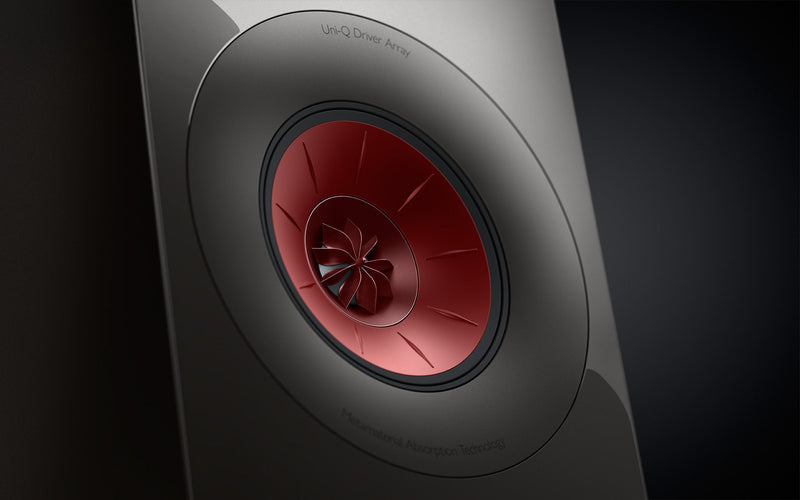
12th Generation Uni-Q with MATAt the heart of the R7 Meta, as in every R Series Meta model, is the 12th generation Uni-Q driver array. By placing the 25 mm vented aluminium dome tweeter in the acoustic centre of the midrange cone, Uni-Q acts as a single point source - enlarging the 'sweet spot' and dispersing sound far more evenly around the room, so the stereo image holds together wherever you sit.
Behind the tweeter sits MAT, KEF's Metamaterial Absorption Technology: a maze-like disc of channels, each tuned to absorb a specific frequency. Together they absorb 99% of the unwanted sound radiating from the rear of the tweeter, virtually eliminating the resulting distortion for a purer, more natural high-frequency performance.
Behind the tweeter sits MAT, KEF's Metamaterial Absorption Technology: a maze-like disc of channels, each tuned to absorb a specific frequency. Together they absorb 99% of the unwanted sound radiating from the rear of the tweeter, virtually eliminating the resulting distortion for a purer, more natural high-frequency performance.
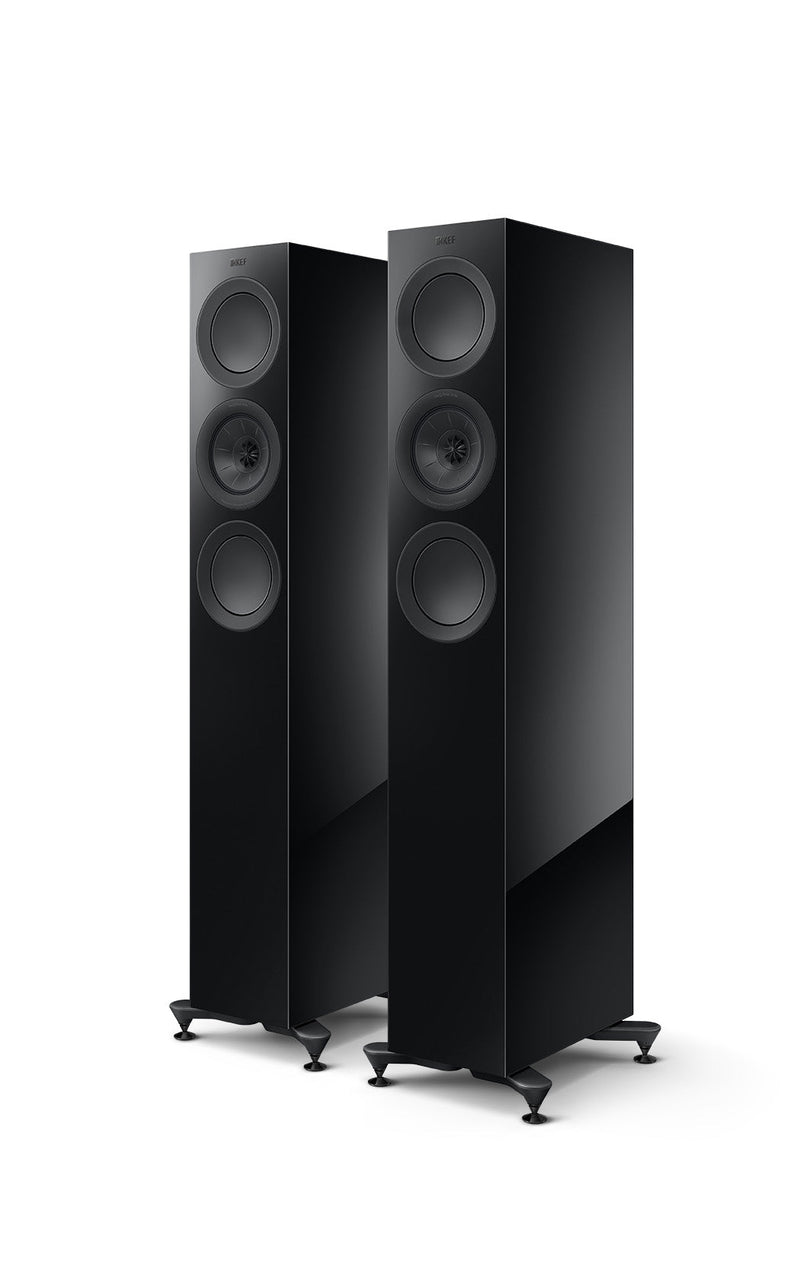
12th Generation Uni-Q with MATAt the heart of the R5 Meta, as in every R Series Meta model, is the 12th generation Uni-Q driver array. By placing the 25 mm vented aluminium dome tweeter in the acoustic centre of the midrange cone, Uni-Q acts as a single point source - enlarging the 'sweet spot' and dispersing sound far more evenly around the room, so the stereo image holds together wherever you sit.
Behind the tweeter sits MAT, KEF's Metamaterial Absorption Technology: a maze-like disc of channels, each tuned to absorb a specific frequency. Together they absorb 99% of the unwanted sound radiating from the rear of the tweeter, virtually eliminating the resulting distortion for a purer, more natural high-frequency performance.
Behind the tweeter sits MAT, KEF's Metamaterial Absorption Technology: a maze-like disc of channels, each tuned to absorb a specific frequency. Together they absorb 99% of the unwanted sound radiating from the rear of the tweeter, virtually eliminating the resulting distortion for a purer, more natural high-frequency performance.
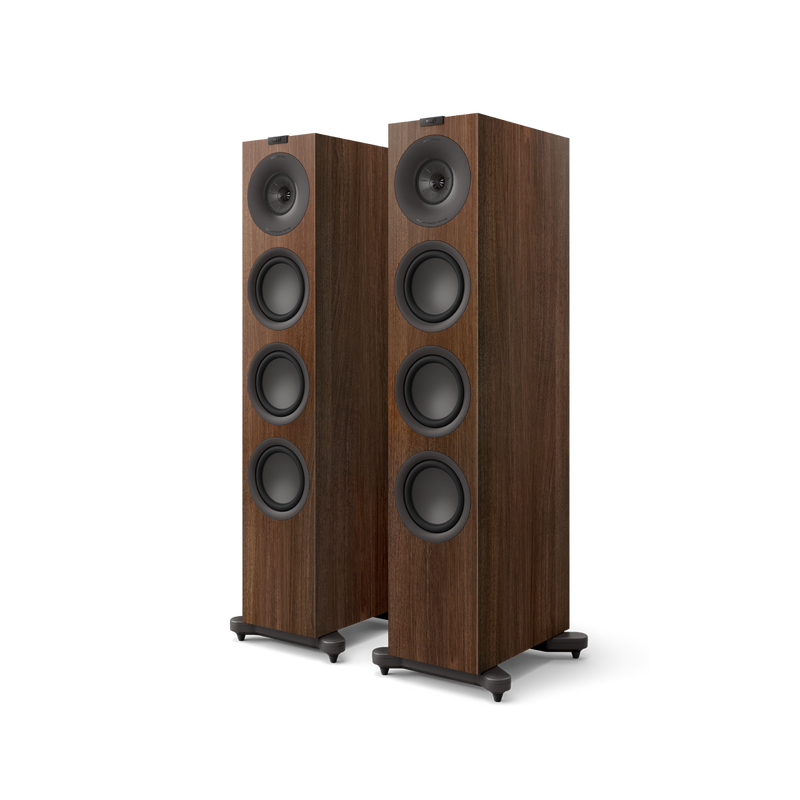
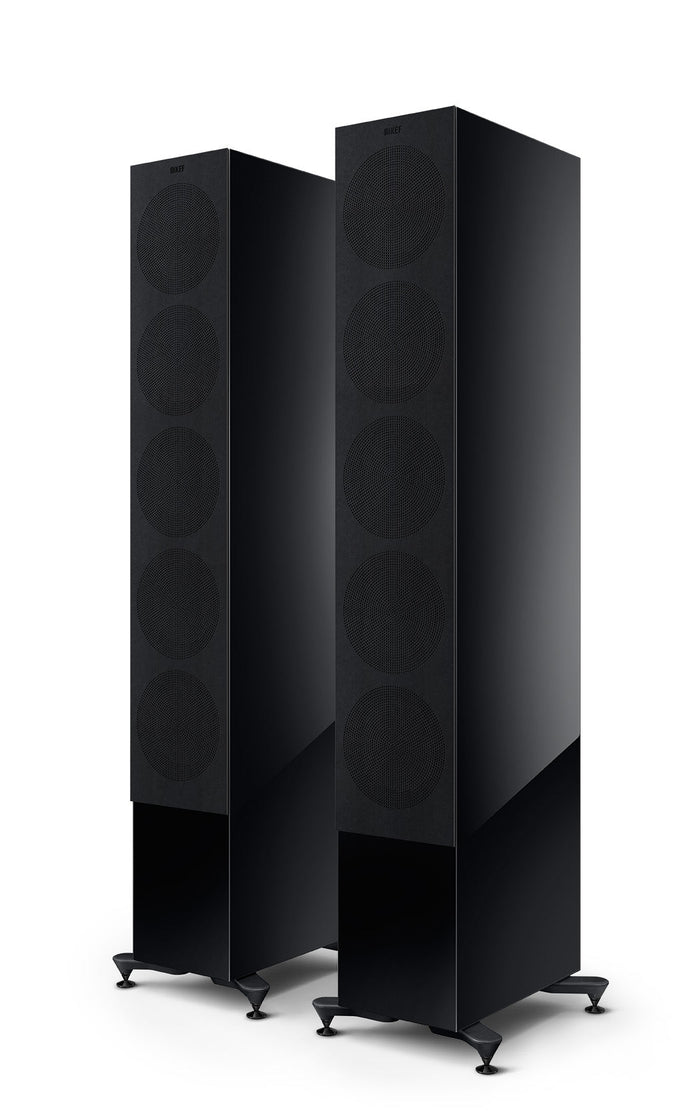
Drive Units and BassQ11 Meta is a three-way bass reflex design using three 165 mm (6.5 in.) hybrid aluminium bass drivers. Splitting midrange from bass means the Uni-Q array never has to move air for the low end, so the midband stays clean while the woofers work.
Crossover points sit at 480 Hz, 2.7 kHz. Frequency range is 37 Hz - 20 kHz (-6dB) with a typical in-room bass response of 26 Hz, maximum output 113 dB, sensitivity 89 dB and nominal impedance 4 Ohm (min. 3.2 Ohm) - so amplifiers from 15 - 225 W suit it.
Crossover points sit at 480 Hz, 2.7 kHz. Frequency range is 37 Hz - 20 kHz (-6dB) with a typical in-room bass response of 26 Hz, maximum output 113 dB, sensitivity 89 dB and nominal impedance 4 Ohm (min. 3.2 Ohm) - so amplifiers from 15 - 225 W suit it.
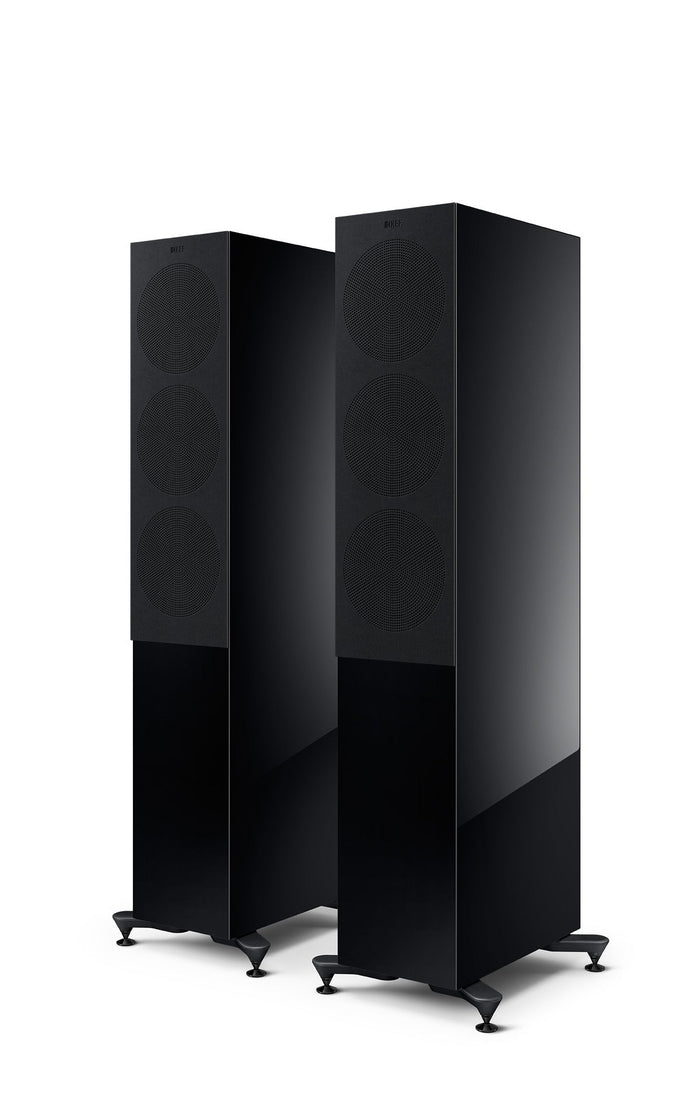
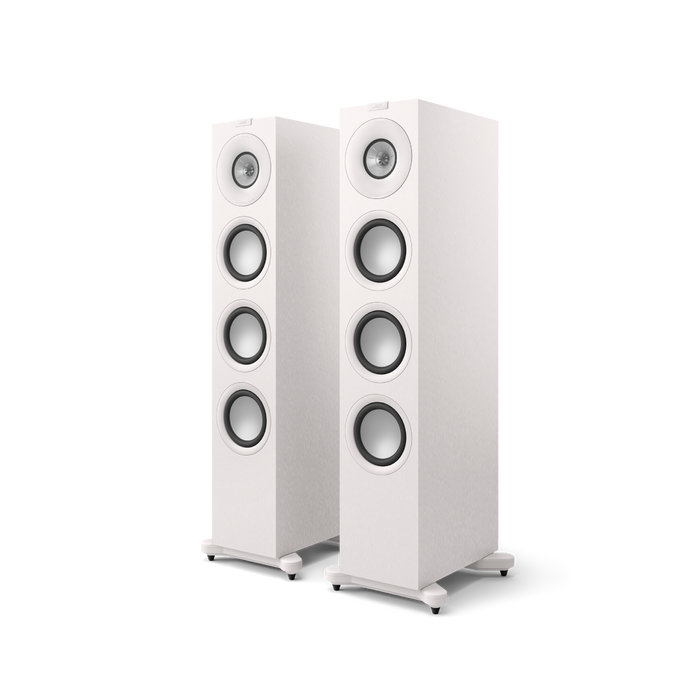
Drive Units and BassQ7 Meta is a three-way bass reflex design using two 165 mm (6.5 in.) hybrid aluminium bass drivers. Splitting midrange from bass means the Uni-Q array never has to move air for the low end, so the midband stays clean while the woofers work.
Crossover points sit at 440 Hz, 2.3 kHz. Frequency range is 39 Hz - 20 kHz (-6dB) with a typical in-room bass response of 28 Hz, maximum output 110 dB, sensitivity 87 dB and nominal impedance 4 Ohm (min. 3.2 Ohm) - so amplifiers from 15 - 200 W suit it.
Crossover points sit at 440 Hz, 2.3 kHz. Frequency range is 39 Hz - 20 kHz (-6dB) with a typical in-room bass response of 28 Hz, maximum output 110 dB, sensitivity 87 dB and nominal impedance 4 Ohm (min. 3.2 Ohm) - so amplifiers from 15 - 200 W suit it.
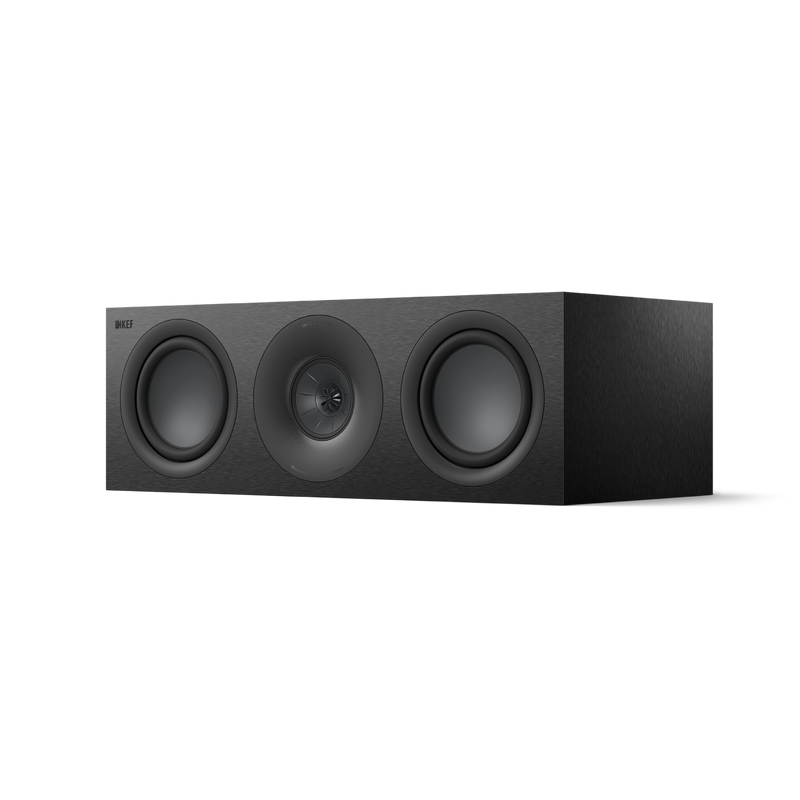
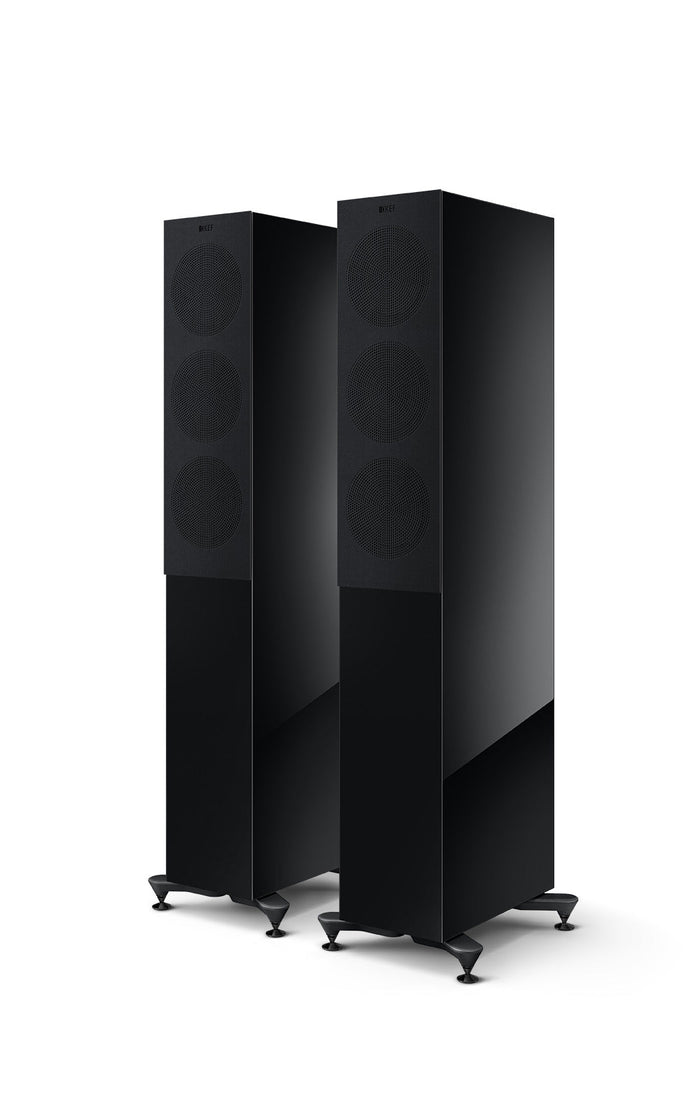
Drive Units and BassQ6 Meta is a three-way closed box design using two 165 mm (6.5 in.) hybrid aluminium bass drivers. Splitting midrange from bass means the Uni-Q array never has to move air for the low end, so the midband stays clean while the woofers work.
Crossover points sit at 560 Hz, 2.7 kHz. Frequency range is 52 Hz - 20 kHz (-6dB) with a typical in-room bass response of 36 Hz, maximum output 109 dB, sensitivity 86 dB and nominal impedance 4 Ohm (min. 3.2 Ohm) - so amplifiers from 15 - 200 W suit it.
Crossover points sit at 560 Hz, 2.7 kHz. Frequency range is 52 Hz - 20 kHz (-6dB) with a typical in-room bass response of 36 Hz, maximum output 109 dB, sensitivity 86 dB and nominal impedance 4 Ohm (min. 3.2 Ohm) - so amplifiers from 15 - 200 W suit it.
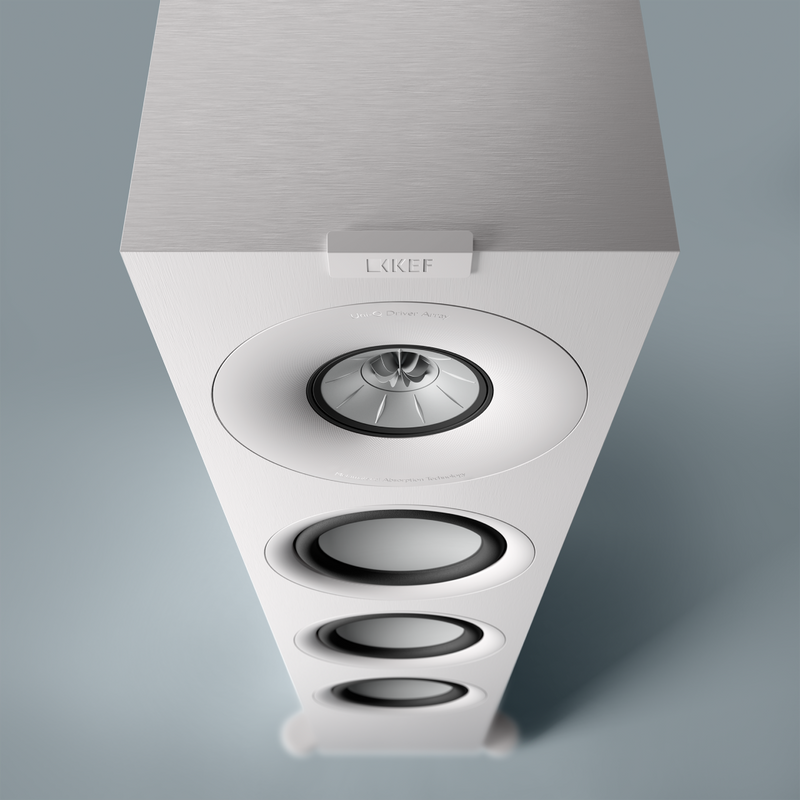
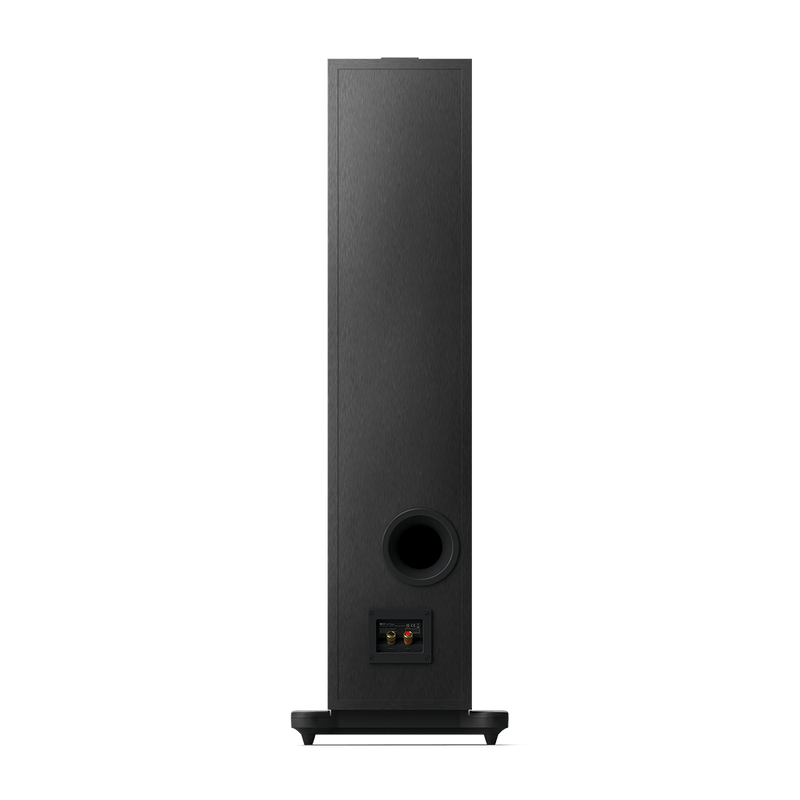
Cabinet and PortQ11 Meta uses a braced bass reflex cabinet. The port fires to the rear and its profile changes gradually along its length, so airflow slides into turbulence rather than hitting it abruptly and port noise is pushed clear of the audible band.
Around the Uni-Q array, Shadow Flare smooths the transition from the driver into the baffle so the cabinet edge stops acting as a secondary sound source. The magnetic grille attaches without visible fixings, and Q11 Meta measures H 1,112 x W 317 x D 380 mm with plinth (1,061 x 210 x 380 mm without plinth) at 22.5 kg (49.6 lbs) per unit.
Around the Uni-Q array, Shadow Flare smooths the transition from the driver into the baffle so the cabinet edge stops acting as a secondary sound source. The magnetic grille attaches without visible fixings, and Q11 Meta measures H 1,112 x W 317 x D 380 mm with plinth (1,061 x 210 x 380 mm without plinth) at 22.5 kg (49.6 lbs) per unit.
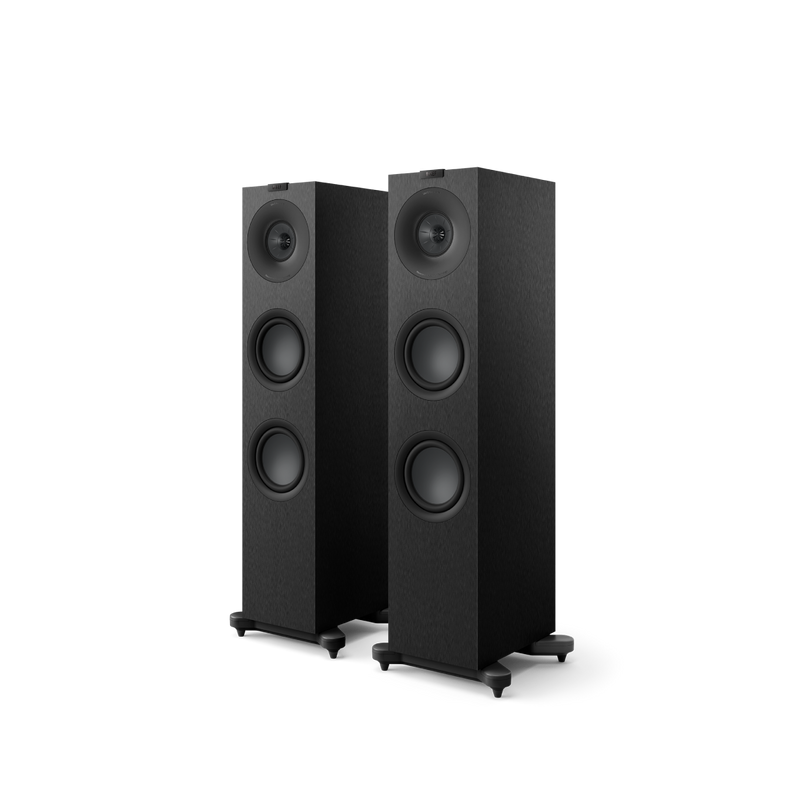
Cabinet and PortQ7 Meta uses a braced bass reflex cabinet. The port fires to the rear and its profile changes gradually along its length, so airflow slides into turbulence rather than hitting it abruptly and port noise is pushed clear of the audible band.
Around the Uni-Q array, Shadow Flare smooths the transition from the driver into the baffle so the cabinet edge stops acting as a secondary sound source. The magnetic grille attaches without visible fixings, and Q7 Meta measures H 1,001 x W 317 x D 315 mm with plinth (950 x 210 x 315 mm without plinth) at 18.4 kg (40.6 lbs) per unit.
Around the Uni-Q array, Shadow Flare smooths the transition from the driver into the baffle so the cabinet edge stops acting as a secondary sound source. The magnetic grille attaches without visible fixings, and Q7 Meta measures H 1,001 x W 317 x D 315 mm with plinth (950 x 210 x 315 mm without plinth) at 18.4 kg (40.6 lbs) per unit.
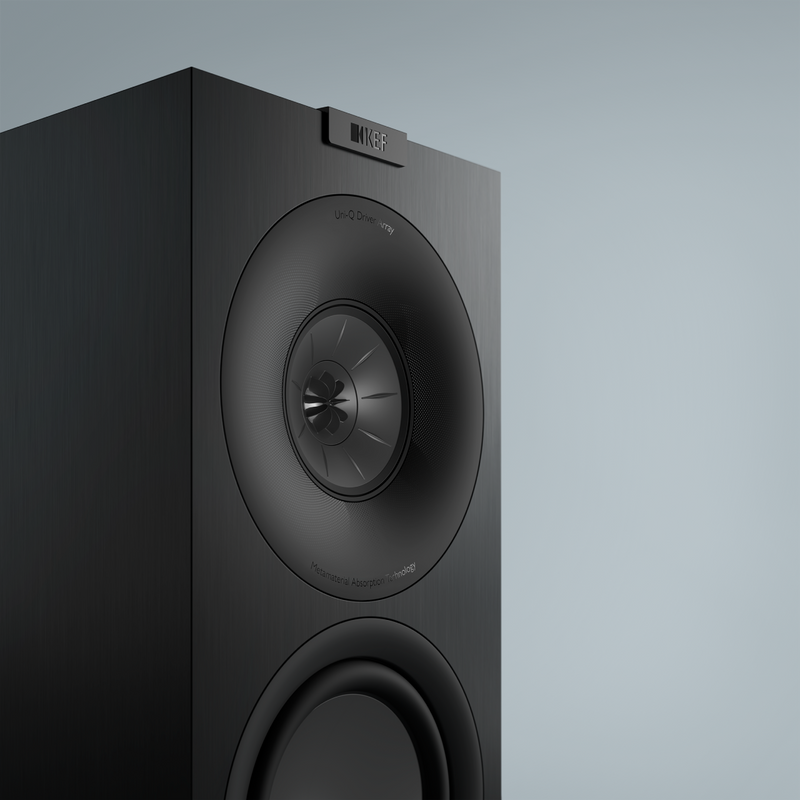
Cabinet and PortQ Concerto Meta uses a braced bass reflex cabinet. The port fires to the rear and its profile changes gradually along its length, so airflow slides into turbulence rather than hitting it abruptly and port noise is pushed clear of the audible band.
Around the Uni-Q array, Shadow Flare smooths the transition from the driver into the baffle so the cabinet edge stops acting as a secondary sound source. The magnetic grille attaches without visible fixings, and Q Concerto Meta measures H 415 x W 210 x D 315 mm at 9.5 kg (20.9 lbs) per unit.
Around the Uni-Q array, Shadow Flare smooths the transition from the driver into the baffle so the cabinet edge stops acting as a secondary sound source. The magnetic grille attaches without visible fixings, and Q Concerto Meta measures H 415 x W 210 x D 315 mm at 9.5 kg (20.9 lbs) per unit.
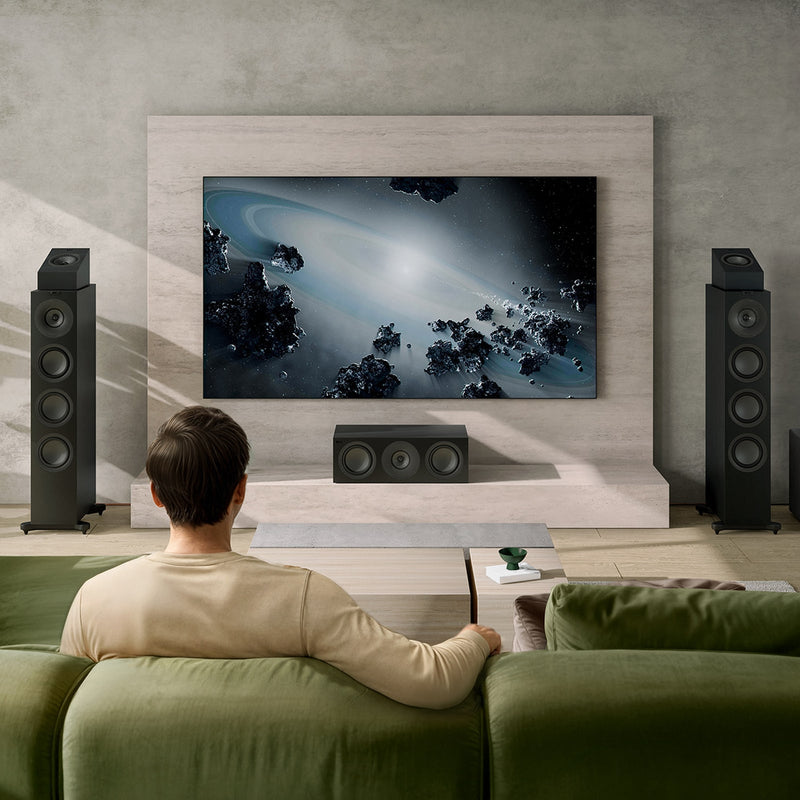
Finishes and a Matched SystemQ11 Meta is offered in Satin Black / Satin White / Walnut, with a magnetically attached grille that leaves the baffle clean when removed.
Every Q Series Meta model shares the same Uni-Q array and voicing, so a stereo pair, a centre channel, surrounds and height speakers drawn from the range stay tonally identical as sound travels around the room - which is exactly what a multichannel system needs and what mixing brands cannot give you.
Every Q Series Meta model shares the same Uni-Q array and voicing, so a stereo pair, a centre channel, surrounds and height speakers drawn from the range stay tonally identical as sound travels around the room - which is exactly what a multichannel system needs and what mixing brands cannot give you.
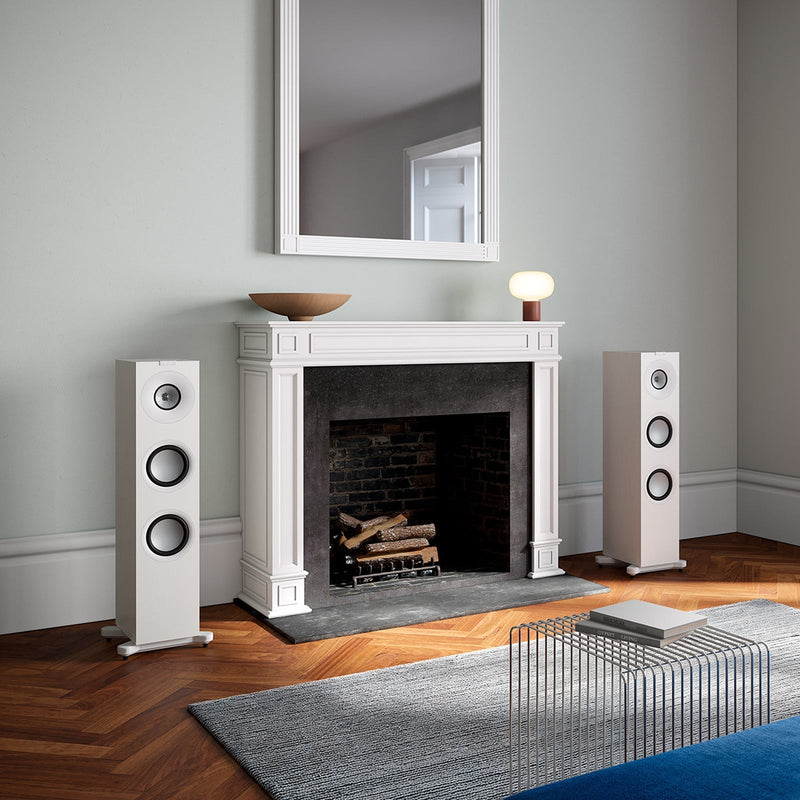
Finishes and a Matched SystemQ7 Meta is offered in Satin Black / Satin White / Walnut, with a magnetically attached grille that leaves the baffle clean when removed.
Every Q Series Meta model shares the same Uni-Q array and voicing, so a stereo pair, a centre channel, surrounds and height speakers drawn from the range stay tonally identical as sound travels around the room - which is exactly what a multichannel system needs and what mixing brands cannot give you.
Every Q Series Meta model shares the same Uni-Q array and voicing, so a stereo pair, a centre channel, surrounds and height speakers drawn from the range stay tonally identical as sound travels around the room - which is exactly what a multichannel system needs and what mixing brands cannot give you.
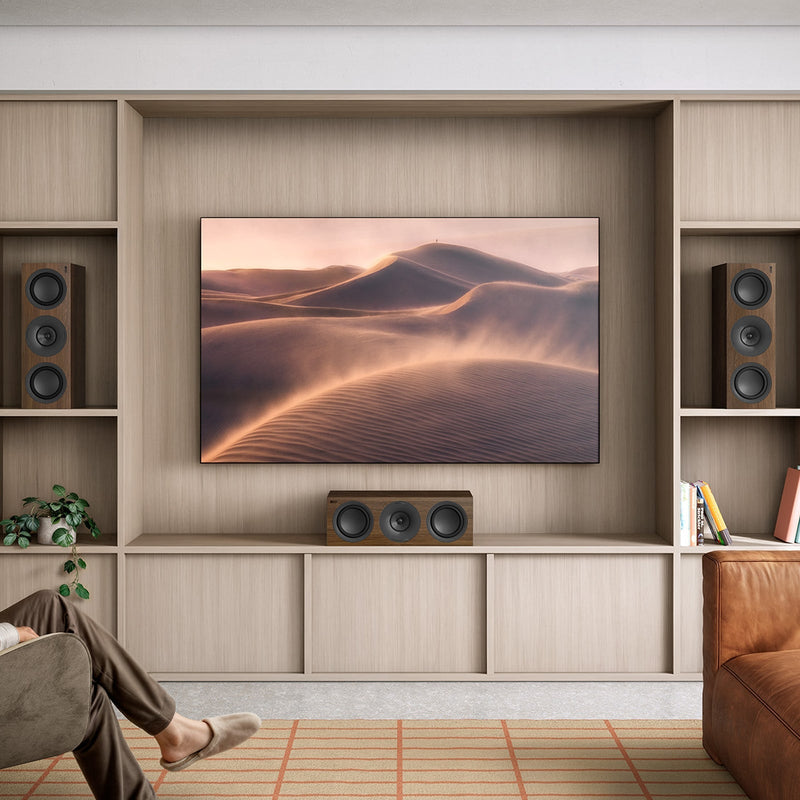
Finishes and a Matched SystemQ6 Meta is offered in Satin Black / Satin White / Walnut, with a magnetically attached grille that leaves the baffle clean when removed.
Every Q Series Meta model shares the same Uni-Q array and voicing, so a stereo pair, a centre channel, surrounds and height speakers drawn from the range stay tonally identical as sound travels around the room - which is exactly what a multichannel system needs and what mixing brands cannot give you.
Every Q Series Meta model shares the same Uni-Q array and voicing, so a stereo pair, a centre channel, surrounds and height speakers drawn from the range stay tonally identical as sound travels around the room - which is exactly what a multichannel system needs and what mixing brands cannot give you.